Legacy Ad Networks vs Purpose-Built AI Publisher Exchanges
AI chat ads demand entirely different infrastructure than legacy display networks.
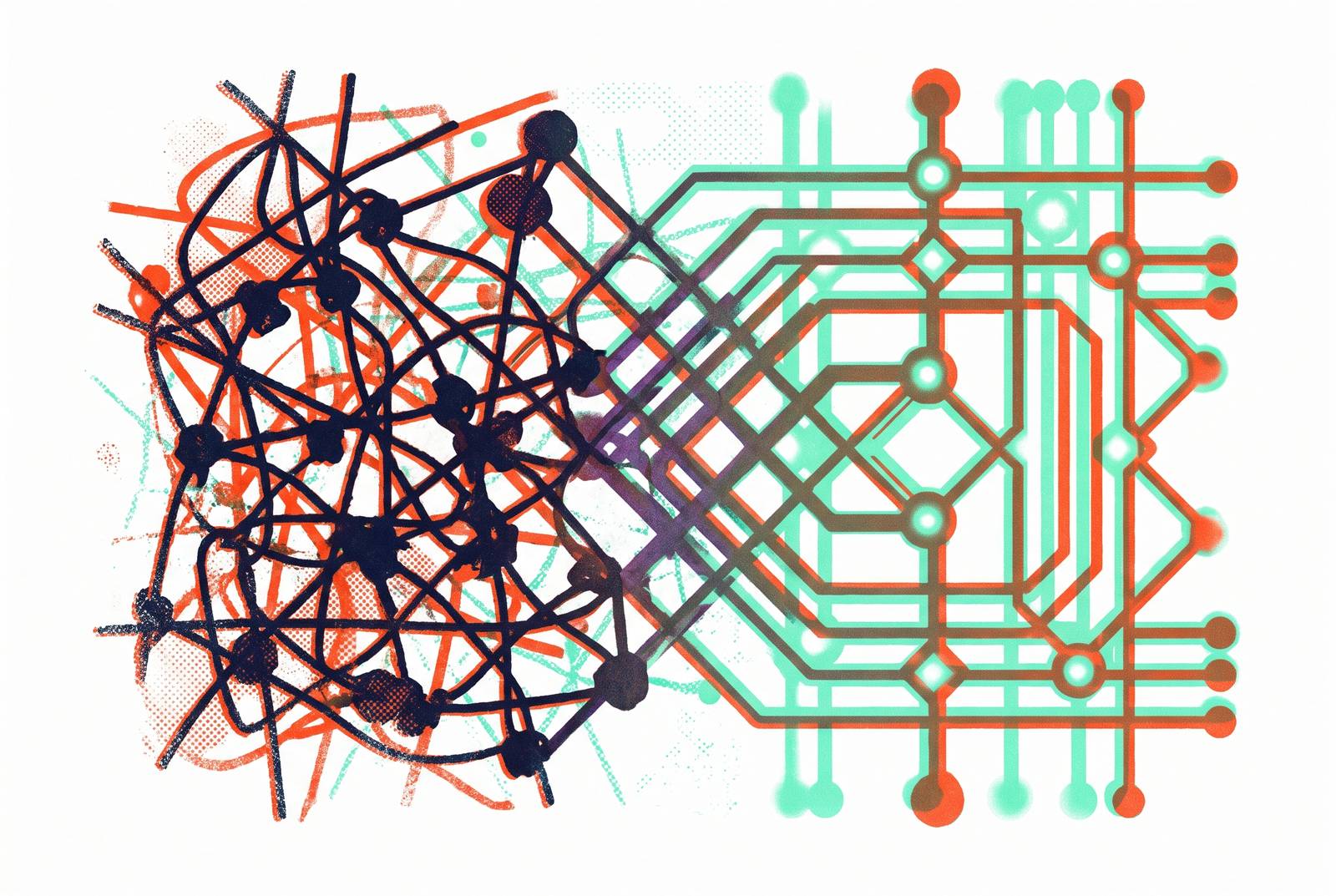
Legacy Ad Networks vs Purpose-Built AI Publisher Exchanges.
AI publisher monetization as a distinct problem from retargeting
AI publisher monetization is not a smaller version of display ads failing to keep up with how publishers now make money, and treating it that way is the mistake most product teams are about to make. The inventory itself is new in a way that matters: an LLM chat turn is not a URL, not a banner slot, not a keyword auction. It's a real-time exchange where the user has already told you, in plain language, what they want. That's a different kind of signal than anything a cookie ever gave an ad server, and it demands a different kind of infrastructure to act on it.
The money is already proving this out. ChatGPT hit a $1 billion annualized revenue run rate in under 200 days, with advertisers buying across more than 40 countries beet.tv. That's not a pilot program finding its footing. That's a market showing up faster than the infrastructure built to serve it.
Standalone chatbot ad spend is still a small slice of total AI ad spend this year, but it's growing at a pace that turns "eventually" into "now" for anyone building product roadmaps. So the real question facing an AI app founder or an LLM product team is not whether to monetize, but what the infrastructure choice actually costs them. It's what the infrastructure choice actually costs them, in product quality, in revenue capture, and in user trust. That question is structural, not cosmetic. It's about whether the plumbing was built for the pipe it's now being asked to carry.
The assumptions baked into a legacy ad network's architecture
Legacy ad networks were built on a premise: a page exists, it has a URL, a cookie can be read against it, and an auction runs on the combination of that URL and that user profile. Everything downstream follows from that premise. A publisher tags a page, the ad server reads the cookie and the URL, a DSP bids against the resulting signal, creative renders into a slot with known dimensions, an impression fires, and a click gets tracked to a landing page. It's a clean, linear pipeline, and it has run the internet's advertising economy for a long time.
The economics built on top of that pipeline deserve to be named. Those numbers aren't arbitrary. They reflect what it costs to run cookie-based, page-level auctions at scale, and what margin a network needs to keep doing it. Programmatic now accounts for 91.5% of all digital display spend, making this the dominant architecture rather than marginal infrastructure being slowly phased out digitalapplied.com. It's the dominant system still running the show.
And within that paradigm, architecture choices already move real money. Publishers who go from a single demand source to multiple exchanges through header bidding see, on average, a 57% jump in ad revenue blog.ritsads.com. That's a useful data point on its own: it tells you something about the industry's instincts, since even inside a system built around pages and cookies, the operators who got the plumbing right outperformed the ones who didn't.
But every part of that pipeline assumes a page. Targeting assumes a cookie or a keyword, not intent declared in the moment. Creative assumes a fixed slot with known pixel dimensions. Attribution assumes a click that lands on a URL somewhere. And latency, in this world, is a quality-of-service metric, something you optimize for a better score, not something that can break the product outright if it goes wrong. None of these assumptions survive contact with an LLM chat interface. That's not a criticism of the architecture. It's just not what it was built for. Revenue share norms reflect this model: publishers keep 68% on Google AdSense/AdX, with Google retaining 32% (per research sources), while Propeller Ads passes 75% to publishers with average RPMs of $13–$15 (adsnetwork.io, softwaretestinghelp.com, beet.tv, Adslectic, 2026).
The four places a conversation breaks legacy ad infrastructure
Start with the most basic mismatch: there's no page, no URL, no cookie. Legacy networks bid against a URL signal, and a chat turn simply doesn't produce one. ChatGPT's own ad targeting works off topic of conversation, past chats, and past ad interactions, and OpenAI doesn't hand advertisers access to user data at all: advertisers supply "context hints" that get matched thematically, not keyword by keyword. It's not degraded. It's blind, at exactly the moment the user has given the clearest signal of intent in the entire journey.
Second, creative has nowhere to go. Legacy display assumes known dimensions, a banner, a rectangle, a leaderboard, and LLM interfaces render text, not an HTML canvas. Perplexity found out how sensitive this is the hard way: it shipped sponsored follow-up chips, then pulled the format entirely in February 2026 over user-trust concerns. A legacy network has no mechanism to even register that kind of signal, let alone respond to it. Building creative for a chat surface isn't a matter of resizing a banner ad down to fit a smaller box. It requires understanding where in an answer an ad can sit and what the answer actually said before it.
Third, latency shifts from a performance metric to a product-breaking constraint. On a web page, a slow ad loads in behind the content the user is already reading, and nobody notices. Legacy ad servers were built to respond to a page load event, not to sit inside a live token-generation stream where a delay is visible in real time as the answer stutters.
Fourth, attribution has no landing page to close the loop. The legacy chain runs impression to click to URL to conversion pixel, and every one of those steps assumes a browsable destination on the other end. Agentic monetization asks for something the model can't do in a single call: ground a product mention in a live catalog, attach a trackable click identifier, route the resulting attribution to the correct publisher account, and enforce frequency caps per user across calls. The workable fix that's emerged is a parallel, rule-based ad pipeline running alongside the LLM, not a patch bolted onto the existing ad server. Measurement and attribution in conversational AI are genuinely unsolved right now, and any platform claiming it has full-stack attribution nailed down deserves a skeptical read.
The purpose of purpose-built AI publisher exchanges
A purpose-built AI ad exchange has to address four layers at once: demand and auction, context and targeting, creative generation, and measurement and attribution. That's the whole stack, and skipping any one of the four layers means the other three don't matter much.
A few platforms illustrate how differently this gets built when you start from the conversation instead of the page. Surfacedd runs an 80% developer revenue share with no publisher minimums, and connects more than 4,200 AI applications with over 850 brand advertisers, describing itself as the largest AI app inventory available surfacedd.com. Koah raised a $20.5 million Series A pitched as "AdSense for AI," and reports processing 170 million queries and delivering 35 million native ad impressions in just over a year, with self-reported figures putting eCPM at $21.29 and CTR at 4.38%, alongside claims of 3x higher payouts than legacy platforms and a 25% average lift in monthly revenue, and these are the company's own numbers, not third-party audited aidecisionbrief.substack.com getchatads.com getchatads.com. Jutera, operated by Austin-based Bajaar LLC, positions itself as an ad tech layer purpose-built for chat interfaces and LLM systems, carries SOC 2 Type II certification along with GDPR and CCPA compliance, and runs ad requests in parallel with AI generation rather than waiting on it.
The structural bet is for a DSP and SSP that operates across AI surfaces rather than locking into one app. That position sits in a gap neither side of the old world covers: legacy generalist DSPs have reach but can't read a conversation, while single-surface AI networks can read the conversation but can't scale past the one interface they were built for. Legacy incumbents haven't ignored this shift, either. Taboola is extending its native ad infrastructure into LLM environments with AI-assisted campaign tools, which is worth noting as evidence that retrofitting is being attempted, not as evidence that retrofitting solves the structural problems described above.
What actually separates "purpose-built" from "retrofitted" comes down to a handful of concrete design choices. The context layer reads the conversational turn itself, doing semantic matching against what the user actually meant rather than a keyword or demographic lookup against a page category. The latency architecture runs the ad request in parallel with generation, on a hard timeout that fails gracefully to no-fill rather than ever blocking the model's output stream. Disclosure compliance means the "Sponsored" label ships as part of the ad object itself, not something the publisher has to remember to bolt on afterward. Surfacedd's 80% against AdX's 68% isn't just competitive pressure; the absence of legacy infrastructure overhead appears directly in the publisher's take adsnetwork.io surfacedd.com. Dappier discloses $5–$15 CPMs and runs dual revenue streams (on-site agentic ads, sponsored prompts embedded in AI conversations, and off-site content licensing through a data marketplace), with partnerships with Sovrn and LiveRamp, and a flagship case of HomeLife Brands with 25 million monthly users (per GetChatAds, sourced in S1) (getchatads.com, beet.tv).
What the publisher evaluation checklist looks like in 2026
Evaluating one of these platforms starts with disclosure. Does the "Sponsored" label arrive built into the ad object, or is the publisher on the hook to implement it manually? Manual implementation isn't just extra engineering work; it raises a compliance risk at the worst time.
Brand-safety filtering needs a second look too. Page-category filters inherited from display advertising are too blunt an instrument for a conversational surface; the real question is whether a platform evaluates safety at the level of the individual prompt, or the session, rather than falling back on category-level rules built for a different medium.
Fill rate is where a lot of pitch decks get generous. Overall fill rate is close to a vanity number. What actually matters is fill rate on the subset of prompts that carry genuine commercial intent, and that figure should be asked for explicitly, broken out on its own.
Revenue share transparency affects how much of that headline percentage a publisher actually keeps once fees and terms are factored in.
Then there's the targeting mechanism itself. ChatGPT advertisers currently can't target specific keywords at all; they supply context hints that get matched thematically. Any network under evaluation should be able to explain its equivalent: does it read the actual prompt, a topic classification one level removed from it, or just the broad app category? Each answer produces a meaningfully different quality of match.
Surface compatibility rounds out the list. Which of the real production formats does the platform actually support, the inline card, the sidebar, the sponsored chip, the response-grounded mention? And does the platform have a gallery of real, shipped examples to point to, not mockups from a deck?
Trust deserves more weight than it usually gets. Perplexity shipped sponsored follow-up questions in November 2024 and pulled the format entirely in February 2026 once user trust started eroding. That's proof a monetization format can burn trust faster than it accumulates revenue, and it means the evaluation should include how a platform has actually handled a trust incident in the past, not just how cleanly its policy page reads. IAB reporting has 78% of brands planning to put budget behind AI-native advertising channels by 2027, up from just 22% in 2025 getchatads.com IAB, 2026. Whichever publisher infrastructure is actually ready when that budget moves is the infrastructure that captures it.
The timing risk publishers take by waiting for the market to settle
The market isn't waiting for anyone to feel ready. AI advertising spend reached $3.8 billion in 2026, up from $900 million the year before, a 320% growth rate, and eMarketer has US AI ad spending reaching $68.25 billion by 2030 eMarketer, 2026 eMarketer, 2026 getchatads.com. That's the kind of curve that punishes hesitation.
The advantage of moving early includes the data that accumulates from doing it, beyond just the revenue captured along the way. It's the data that accumulates from doing it. A publisher that ships integration now starts learning, in its own product, which placement formats actually work, which advertiser categories fit its specific audience, and what fill rates look like against its own real prompt mix. None of that is available secondhand, and none of it is available to a publisher still waiting on the sidelines.
There's also a UX cost to waiting that's easy to underrate. Users who join a platform after ads are already part of the experience tend to accept them as simply how the product works. Users who get used to an ad-free product and then watch ads appear later are far more likely to read that change as a trust violation rather than a normal business decision. Timing here shapes the user relationship, not just the revenue line.
The switching costs compound too, and they're not abstract. A publisher that builds its integration against a legacy network's API and later needs to move to a purpose-built exchange is re-engineering the trigger layer, the fetch layer, and the render layer described earlier in this piece. It's re-engineering the trigger layer, the fetch layer, and the render layer described earlier in this piece, and those costs only grow as the audience the publisher is serving gets bigger.
The direction of the market isn't really up for debate when you zoom out. Dentsu projects 71.6% of global ad spend will be algorithm-driven by 2026, climbing to 76% by 2028 Dentsu, 2026. The open question is whether a given publisher's monetization infrastructure is built to participate in that shift, or structurally locked out of it before the shift even arrives. It's whether a given publisher's monetization infrastructure is built to participate in it, or structurally locked out of it before the shift even arrives Dentsu, 2026. Framed that way, this was never really a contest between legacy and purpose-built as competing brands to pick a favorite from. It's a question of whether the infrastructure was designed for the environment it's now being asked to run inside. For LLM surfaces, that question already has a clear engineering answer. SOURCE PAGES: what the pages behind the outline's links say.