The Startups Defining Conversational AI Advertising From the Ground Up Not the Banner Ad Era
Startups are building AI ad systems that read live conversation instead of matching static signals.
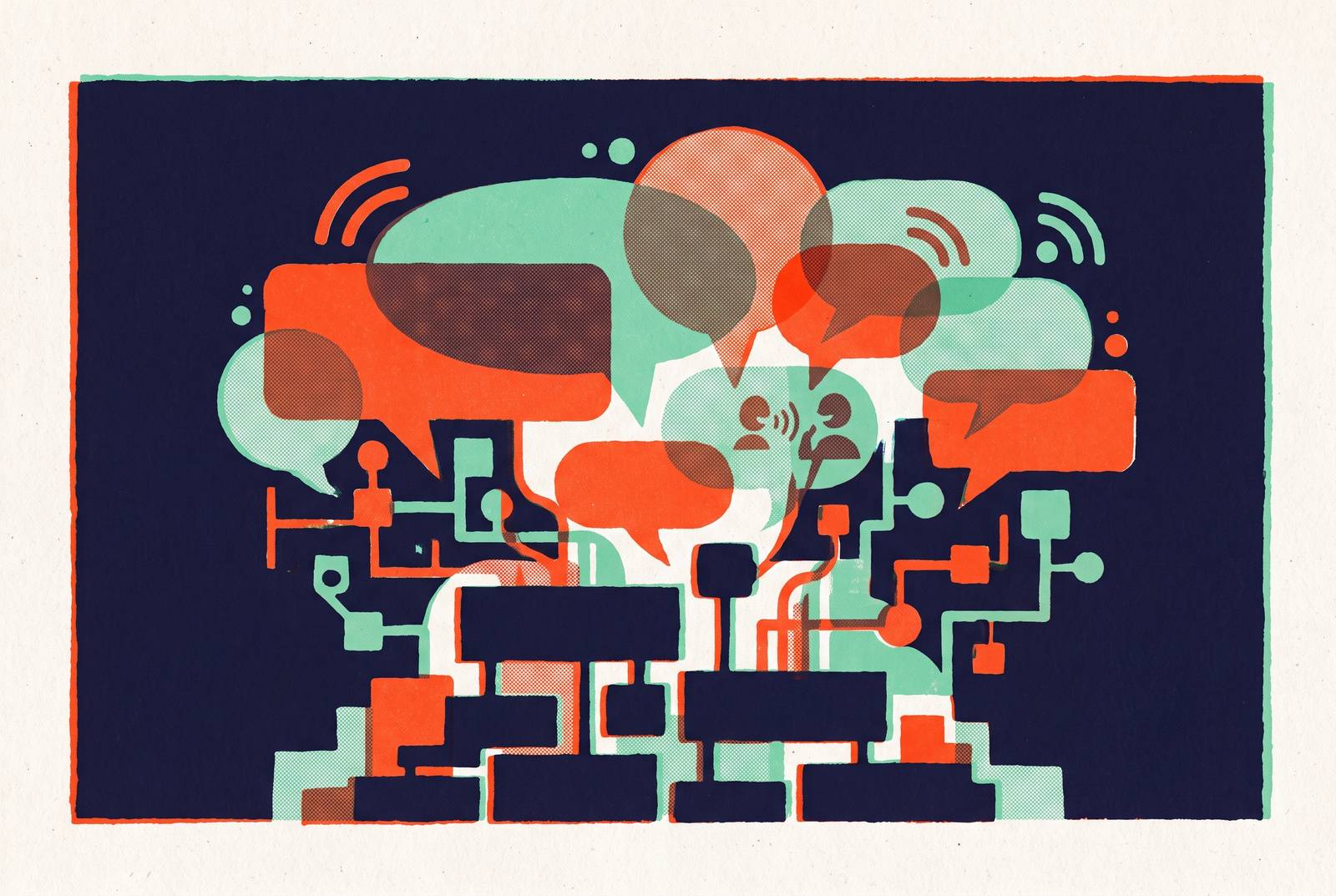
Conversational AI advertising places paid messages inside AI assistant interfaces by matching them to the conversation in progress. Thrad represents a cross-surface approach, while native assistant ad systems operate within individual platforms. The startups defining this category are building around live intent because buying conversational inventory requires systems that can read a conversation.
Why the tools built for search and social cannot read a conversation
Legacy ad systems match static signals, but an AI conversation is an evolving context. A keyword, a page visit or a demographic bucket gives the system a discrete input. A dialogue instead accumulates meaning across exchanges, and its active intent can change with each response. Treating the latest message as an isolated string discards the context that makes it useful.
Traditional contextual targeting also assumes that content settles into a page with metadata to inspect. A generated conversation does not provide that stable targeting unit. Transformer-based LLMs maintain discourse coherence within the limits of their effective context window, so even a short follow-up depends on earlier turns. Systems built around page-level signals cannot learn to do that through changes to campaign settings.
What is conversational AI advertising, and how is it different from adding a chatbot to a site
Conversational AI advertising is paid, targeted commercial messaging inside AI assistant and LLM interfaces that matches the intent of the dialogue as it unfolds. Adding a chatbot to a site creates a conversational interface, but it does not by itself create paid placements, advertiser targeting or an inventory marketplace. The distinction is between providing a conversation and operating an advertising system within one.
AI-generated creative is different again because it changes how copy or images are produced while potentially leaving where and how ads are bought unchanged. Search ads presented with AI answers also retain their existing buying pipelines. Google AI Overviews and Microsoft Copilot surface ads from campaigns advertisers already run, although Microsoft uses conversational context to match placements to the dialogue. Google does not let advertisers opt out of AI Overviews placements.
A cross-surface conversational AI advertising platform has access to live dialogue, matches context in real time and offers inventory across AI interfaces. Those capabilities distinguish it from both a creative tool and a single chatbot window. Importing assumptions from either adjacent category leads teams toward the wrong stack and the wrong measures of success.
How the mechanics of conversational targeting work from the ground up
The targeting unit is conversational state, which represents what the user has said, what the model has answered, the active topic and the apparent goal. Real-time prompt analysis, the foundation of systems such as Thrad, reads that state. The ad server then runs a cascade. Lightweight models reduce a large candidate pool, more sophisticated models score nuanced relevance, and an auction runs among the relevant candidates, all in milliseconds.
The auction is relevance-weighted and second-price, so a precise context hint can beat a larger-spending advertiser’s vague targeting. Bids take into account the intent stage, how specific the query is and how deep the conversation goes, as well as the keyword. Thrad’s programmatic infrastructure uses this logic across AI surfaces through a DSP built on its own exchange and supply that comes directly from publishers.
OpenAI’s “Answer Independence” principle separates advertising from answer generation. The organic answer comes first, after which a separate system evaluates an ad, with clearly labeled formats including tinted-box placements below text answers and visual ads beside image generation results. Microsoft Copilot reads the entire session context. At Google Marketing Live in May 2026, Google began testing Conversational Discovery ads and Highlighted Answers for AI Mode, with Gemini generating customized messaging in real time. Its “Business Agent for Leads” format lets users talk to a Gemini-powered agent grounded in a brand’s website inside an ad unit.
Why prompt-level intent signals carry more purchase signal than any keyword ever did
A three-word search query such as “project management software” declares a category. A prompt of several sentences about teams failing to coordinate, missing deadlines and struggling to work together remotely explains why the category fits the problem. Across eight turns, that conversation can reveal requirements and objections that a keyword never expresses.
An uncompressed prompt can contain category exploration, constraints, comparison criteria and decision-stage signals in a single turn. Search can capture those elements, but they may be spread across many queries over days or weeks. A context-aware system can also tell when a category fits before the user names a product. That creates an opening for awareness advertising while the user is still defining the problem.
The signal also distinguishes research from comparison and decision-making. Specific requirements and openness to alternatives help explain what kind of commercial message belongs at that moment. Yet this richer intent lives within the dialogue and may go uncaptured by a trackable click. Its value therefore creates a measurement requirement as well as a targeting advantage.
Why last-click attribution breaks in a conversational environment and what replaces it
Last-click attribution assigns decisive influence to the click immediately before conversion. A conversational placement can affect a purchase without producing that click at all. A user may receive a sponsored appliance recommendation, add the brand to consideration and buy through a direct channel a week later. Last-click records no contribution from the AI ad because the model excludes the path through which it worked.
Practitioners are therefore turning to lift-based measurement, including incremental conversions among exposed versus unexposed groups, conversation-to-action rates and cost per qualified conversation. These measures track whether a moment in the conversation changed what someone did, while clicks alone are treated as having the same value. Intent-stage signals can also show lift at each stage of research, comparison and decision-making. That is a richer basis for analysis than one blended conversion rate.
But the measurement infrastructure is still new, and advertisers cannot see how platforms use conversational signals to place ads. A DSP that reports only clicks leaves that gap open. Direct publisher relationships, including those behind Thrad’s exchange, give buyers a way to see conversational signals without having to fit them into a search-era dashboard. They do not make attribution a solved problem.
Which industry verticals are structurally positioned to benefit first
Readiness depends less on an industry label than on the structure of its buying process. Conversational advertising has the clearest fit where purchases require substantial consideration, research takes time and people are open to brand influence while explaining a problem. When people state their constraints in those conversations, it helps show which offers would be useful and which are just related to the topic. The diagnostic is whether dialogue reveals information that materially changes which offer belongs.
Consumers use AI for financial services nearly as much as for retail, while a large share of financial services advertising budgets still goes to search. The audience is already using AI environments, but budgets have not followed to the same extent. That gap gives advertisers an opening, though some conversational placements will be worth more than others.
B2B SaaS fits complex, multi-stakeholder problem-solving particularly well, but targeting fit does not guarantee audience access. ChatGPT ads currently reach Free and Go users, with Plus, Pro, Business, Enterprise or Education subscribers excluded. That restriction sharply constrains its B2B reach, so a vertical’s readiness must account for available supply as well as the richness of its potential intent signals.
What the publisher side of conversational AI advertising looks like — and why it needs its own infrastructure
Publishers face a value exchange in which AI crawlers consume content to train and run models without delivering the referral traffic that historically compensated them. Content compensation and conversational ad monetization address different parts of that problem. Licensing pays for access to material. Advertising matched to live dialogue monetizes the interface in which a conversation takes place.
ProRata illustrates the content-compensation approach through licensing and revenue sharing with publishers including The Atlantic, TIME, Fortune, ADWEEK, BuzzFeed and Lee Enterprises. It shares advertising revenue from AI-powered answers that cite publisher content on a 50/50 split backed by attribution algorithms. That model differs from providing publishers with an advertising layer for their own conversational interfaces. It does not remove the need for that layer.
Publisher-side conversational infrastructure must pass context to buyers, enforce safety at the dialogue level and report the signals that set this inventory apart. A legacy system reading a URL and user ID cannot match an ad to a conversation it never receives. Thrad offers one way to fill this infrastructure gap through its publisher-side advertising platform, exchange and direct supply relationships.
How ad safety and brand suitability work differently inside a conversation than on a page
Static-page brand safety classifies content and applies adjacency rules. A live dialogue cannot be fully classified in advance because its meaning changes as the user and assistant exchange messages. A topic that appears suitable at one turn may enter a different context at the next.
A ground-up matching system evaluates the full dialogue against a brand’s suitability requirements at that moment. This places safety within eligibility, before an ad enters the relevant candidate pool. The standard is an ad that is relevant and non-harmful.
Transparency also protects the trust on which the inventory depends. Clear sponsored labeling, separation from organic answers and honest disclosure of why an ad appeared help preserve that boundary. Perplexity chose to wind down its sponsored answer program, and its leadership warned that sponsored placement could make users doubt everything. An ad format that weakens confidence in the assistant can undermine the value of the surface itself.
What separates a ground-up conversational AI ad platform from a generalist DSP that claims coverage
Generalist DSPs and single-surface AI ad networks offer different parts of the required capability. A generalist DSP has reach but lacks a native mechanism for receiving and acting on conversational state. A native assistant ad system can read its own dialogue deeply, but that capability stops at its surface. Neither capability alone provides consistent contextual buying across multiple AI interfaces.
Platform evaluation therefore turns on three diagnostic questions. The first is whether the system can receive conversational context and use it to make a targeting decision. The second is whether one buying interface can reach multiple AI surfaces through the same context-matching logic. The third is whether that supply comes through direct publisher relationships or through conventional exchange infrastructure that carries conventional signals.
Thrad occupies the structural middle ground as a DSP using conversational context matching across AI surfaces, supported by its own publisher-side advertising platform, exchange and direct publisher relationships. That architecture combines contextual precision with cross-surface reach. It does not establish access to every named assistant or make native platform formats interchangeable. Buyers looking at placements inside ChatGPT or other assistants still need to check what supply a platform has, beyond its broad claim to cover conversations.
What brands and adtech teams need to get right before the channel matures
Keyword lists, page-level creative and last-click dashboards belong to a different way of buying ads. Carrying them into conversational advertising can make an architecture problem look like channel failure. Early tests are useful only when targeting, creative and measurement all use the same conversational unit.
Context hint craft is one practical change. A 280-character natural-language description must explain the conversations in which an offer belongs. Creative must then match the user’s problem-solving state. Lift measurement, conversational engagement metrics and cost per qualified conversation should be established before launch, so the campaign can teach more than which placement attracted a click.
These choices build capability through iteration. Platform formats and audience access will evolve, and the advantage of ground-up infrastructure will not remain exclusive as native systems mature and generalist DSPs attempt to handle conversational context. Nevertheless, precision in matching, disciplined measurement and dialogue-appropriate creative compound into a better understanding of the channel. The durable advantage is not arriving first, but building an organization around the signal the environment actually provides.