Which Ad Tech Platforms Actually Buy Against Live Prompt Intent Right Now
Only ChatGPT currently buys ads directly against what users type in real time.
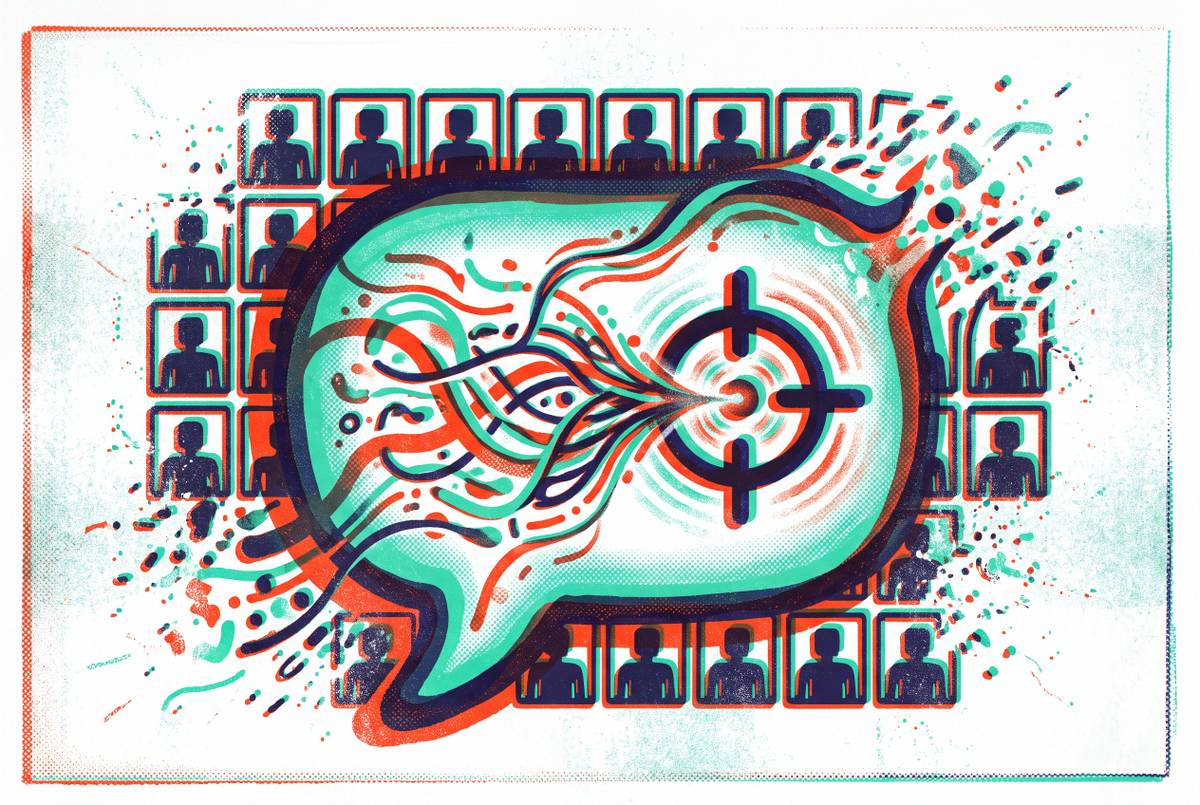
Real-time prompt intent analysis for programmatic advertising means reading a live conversational turn and using its substance to resolve an ad auction before the response arrives. ChatGPT uses context hints for that targeting, while Google and Microsoft use query and campaign signals. The decisive distinction is what the targeting system reads.
Why “buying against prompt intent” means something technically precise, and why that precision exposes most platform claims
Live prompt-intent buying requires three conditions at once. The platform must access the conversational turn as it happens, interpret its substance for targeting, and resolve a live auction before the response is delivered. A keyword match, page category, or user-profile signal applied after the fact does not satisfy that definition.
That distinction separates conversational inventory from two other products routinely called AI advertising. Ads beside AI-generated search summaries can still run through keyword auctions, while AI-assisted creative generation provides design capabilities. A context-hint auction instead matches an advertiser’s description against what someone is trying to accomplish in the conversation. If the targeting layer never touches the live conversation, the platform cannot claim to buy against prompt intent, wherever its ad renders.
Which ad platforms actually analyze live prompt intent, and what does each read at auction time?
ChatGPT, Google AI Overviews and AI Mode, and Microsoft Copilot have buyable inventory in the review periods covered here. Their targeting inputs differ. ChatGPT uses a freeform natural-language context hint, capped at 280 characters and written at the ad group level, which the system matches against the live conversational turn. No keyword layer exists. Its relevance-weighted second-price auction allows a more relevant ad to beat a higher bid, and the system also reads the advertiser’s landing page as a relevance signal during review.
ChatGPT offers CPM-priced Reach and CPC-priced Clicks objectives. Since summer 2026, its Conversions objective has also supported billing per valid click through oCPC or per impressions through oCPM, while bidding toward a tracked conversion event. Those options change the optimization goal while keeping the targeting input constant. Reach has a separate restriction. Ads appear only for Free and Go users, excluding the paid tiers addressed later in this audit.
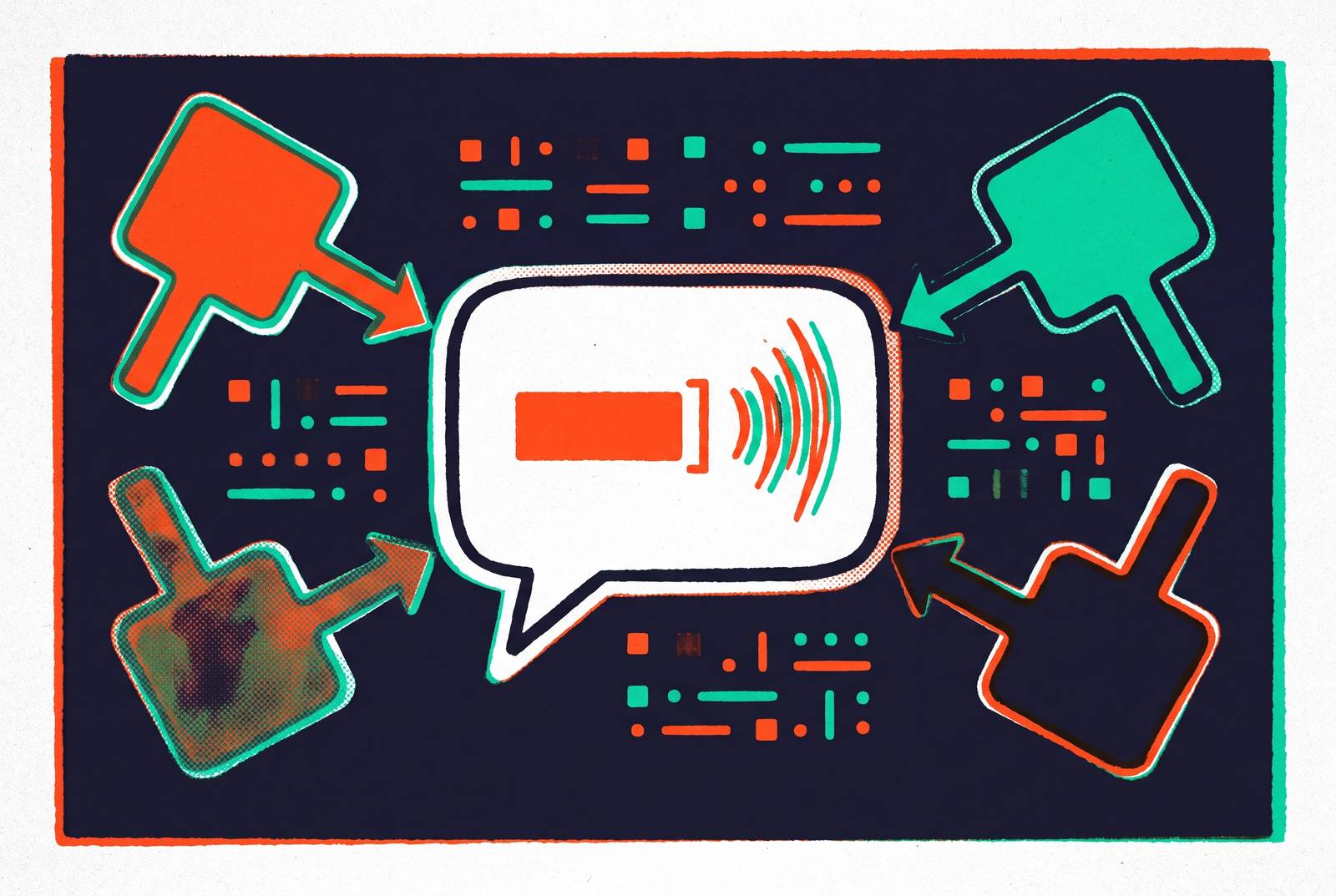
Google’s AI Overviews and AI Mode resolve auctions against the user’s search query and existing campaign signals. The underlying mechanic remains a keyword system, even when an AI-generated answer changes the presentation. Microsoft Copilot also routes through legacy keyword and campaign signals. These buyable AI surfaces therefore differ in how they interpret intent, with conversational targeting capability depending on what each targeting system reads.
Where Google AI Overviews fits and why calling it “conversational AI advertising” is a category error
Most US AI ad spend in 2026 goes to ads beside AI-generated content on search results pages, with less going to ads inside conversational assistants. That distribution explains much of the category’s confusion. Spending classified as AI advertising can represent an extension of an existing search campaign. Google AI Overviews is the clearest example because the results page remains, and the user’s query string still anchors the auction.
The AI layer generates the answer, but the targeting layer has not been rebuilt to read conversational context. Advertisers cannot target based on the substance of the generated answer. Whether ads can run depends instead on the campaign type and its smart bidding status. Search-query targeting and conversational targeting need different controls, even when both put an ad near an AI response.
For advertisers, the practical first step is to audit existing Search, Performance Max, and Shopping campaigns before adding AI-specific budget lines. Some of their money may already be going to AI Overviews without a separate budget. That audit distinguishes existing exposure from genuinely new inventory. Without it, an apparent expansion into conversational advertising may simply rename spend already flowing through search.
The platforms that pulled back or opted out, and what their reasoning reveals about the category’s unresolved problems
Perplexity launched sponsored follow-up questions in late 2024 and discontinued its advertising program in February 2026, citing user trust. Its audience skews toward technology, finance, law, and healthcare professionals, a population particularly relevant to B2B advertisers. Trust constrained the route to monetization.
Anthropic shared that concern about trust but took a different path for its business. Claude has no ads by policy, and Anthropic ran a Super Bowl campaign presenting that stance as a product feature in explicit contrast with OpenAI’s launch. The decision became a marketing asset. It should not be mistaken for an unsuccessful advertising business.
Together, these decisions expose a tension that open advertising platforms must also resolve. Payment buys a sponsored placement beside an organic answer that can recommend a competitor. An advertiser can therefore reach a relevant conversation without capturing the endorsement that shapes the user’s choice, which makes trust and suitability central requirements of the product.
What the ChatGPT tier wall actually does to the addressable audience — and why it matters most for B2B
OpenAI’s documentation limits ChatGPT advertising to Free and Go users. Plus, Pro, Business, Enterprise, and Education users do not see ads. Plan tier defines the reachable audience. Total ChatGPT usage therefore cannot show how many people ads can reach, even when a campaign’s context hint closely matches what the intended buyer is trying to do.
For B2B advertisers, this boundary excludes people using employer-funded Business or Enterprise plans. These work settings matter especially for reaching people who have the authority to buy and decide what to purchase. A more precise hint cannot cross the tier wall. The constraint applies before relevance or bid strength can determine which ad wins.
Free and Go users skew toward personal-use contexts rather than professional buying decisions, so B2B exposure is better understood as awareness and early consideration than access to late-stage decision-makers. For a given advertiser, the tier boundary is more consequential than the platform’s aggregate popularity because the intended professional buying context is available only on eligible tiers.
How context hints actually work — and the specific failure modes that produce off-topic placements
For teams buying ChatGPT inventory, writing the context hint has the most effect on targeting. It is the advertiser’s only targeting control. The system matches that short natural-language description against the live conversational turn, rather than treating it as a keyword, URL, or user-profile rule. Effective writing therefore describes an intent and its circumstances.
A context hint should describe a conversational moment within the 280-character limit. Comma-separated topic lists consistently produce poor matching because a set of subjects does not explain what the person wants to accomplish. Because relevance weighs against bid, a well-matched hint from a smaller budget can beat a vague hint from a larger one.
SE Ranking’s analysis of a large sample of prompts found a significant share of ChatGPT ad placements were off-topic. Imprecise hint construction is a targeting failure mode. It does not mean that the system lacks access to the conversational signal.
The landing page must also continue the conversation described by the hint. The advertising system crawls that page during review and uses it to judge how well it fits. A contradiction between hint and destination weakens the match.
Brand safety inside a dynamically generated response environment is a fundamentally different problem from brand safety on a publisher page
Traditional brand safety classifies a fixed inventory of publisher pages before an impression. A conversational assistant generates its content environment anew for each turn. Suitability must follow that changing context. Page categories alone cannot show whether the response around an ad stays suitable as the conversation changes.
A neutral exchange can drift into health, financial, or legal advice within a few turns. The suitability judgment made at the start is therefore insufficient for later placements. Conversational environments also introduce specific fraud vectors. Automated agents can submit repeated prompts to inflate impressions, while replay attacks can reproduce high-value conversational queries to generate ad counts. Assistants synthesizing multiple sources add attribution ambiguity to this already dynamic environment.
Integral Ad Science announced in October 2026 that it was among the first media quality partners supporting ChatGPT Ads with third-party brand safety and suitability measurement. Continuous contextual evaluation remains a different task from classifying a publisher page once.
OpenAI’s policy excludes ads on health and mental health topics, while financial and legal services require approval or face restrictions. Its August 31, 2026 ad policy v1.5 added legal services to permitted categories in the US only, subject to licensing conditions and manual review. For restricted industries, policy clearance must precede channel planning. Inventory availability does not by itself establish that a particular advertiser can use it.
Measurement in conversational AI environments is genuinely unresolved — and claiming otherwise is the fastest way to misallocate budget
Conversational influence often leaves no attributable click. An assistant can name a brand or shape a shortlist, after which the user acts through another channel. Standard analytics may record the resulting conversion as direct, organic, or unattributed. Last-click reporting still cannot capture that influence when the user’s first exchange was with an assistant that runs ads.
Anudit Vikram of Channel Factory argued that LLMs will likely remain a clickless environment, making selection for inclusion in responses, organic or sponsored, the meaningful marketing signal. That view separates influence from traffic. It also highlights why a sponsored unit running and a brand appearing in the organic answer are different events. Measuring one does not establish the effect of the other.
OpenAI launched its conversion pixel and Conversions API in May 2026. In October 2026, it added an Event Quality Score, a one-day view-through window, and attribution partnerships with Northbeam, Triple Whale, DV Rockerbox, AppsFlyer, Adjust, Branch, Singular, Kochava, Airbridge, and Tenjin. OpenAI also announced partnerships with Haus, Measured, and WorkMagic to explore geo-based incrementality experiments. These tools expand measurement without settling the underlying attribution problem.
For advertisers operating now, workable approaches include assisted-conversion tracking across the full path, organic brand-mention tracking separate from sponsored delivery, and holdout or incrementality testing against baseline demand. Each answers a different question. Industry standards for viewability and conversion in chat do not yet exist, leaving impression buyers without an agreed definition of a viewed conversational impression. Optimization toward a tracked event is useful, but it is not proof of the channel’s total contribution.
What genuine prompt-intent buying infrastructure looks like — and why the gap between legacy retrofits and purpose-built systems determines who captures the channel
The inventory audit exposes a split between reach and conversational depth. Google and Microsoft offer broad surfaces through legacy keyword and campaign signals, while ChatGPT provides conversational targeting within a single surface whose tier boundary excludes much professional usage. Perplexity and Claude, meanwhile, have chosen not to monetize their conversational context through ads.
To buy against prompt intent, the infrastructure needs a targeting mechanism that reads context across turns. It also needs cross-surface reach across conversational assistants, suitability tools built for generated content, and measurement that follows clickless or multi-session influence. These requirements are interdependent. Access across surfaces adds inventory even without a way to read conversations, but a buying system that reads them better still needs the right safety and measurement tools to be complete.
The opportunity comes from the richness of the signal. Prompts can state budgets, constraints, shortlists, and prior rejections explicitly, instead of forcing an advertiser to reconstruct intent from a three-word query. That advantage is available only when the buying infrastructure can read and act on the conversation at the moment it occurs. An AI interface alone does not provide it.
For advertisers building a position now, the durable investment is a repeatable practice of context-hint writing, landing-page matching, and cross-channel measurement. Competition is thin, and auction prices are still discovering their floor. Early campaigns can therefore build learning as well as exposure. The lasting advantage belongs to teams that can turn an expressed need into a relevant, suitable, and measurable placement.